 UK
UK EU
EU AU
AU UAE
UAE


Blog
How to recycle different types of coffee packaging
// Guide · Recycling & Sustainability
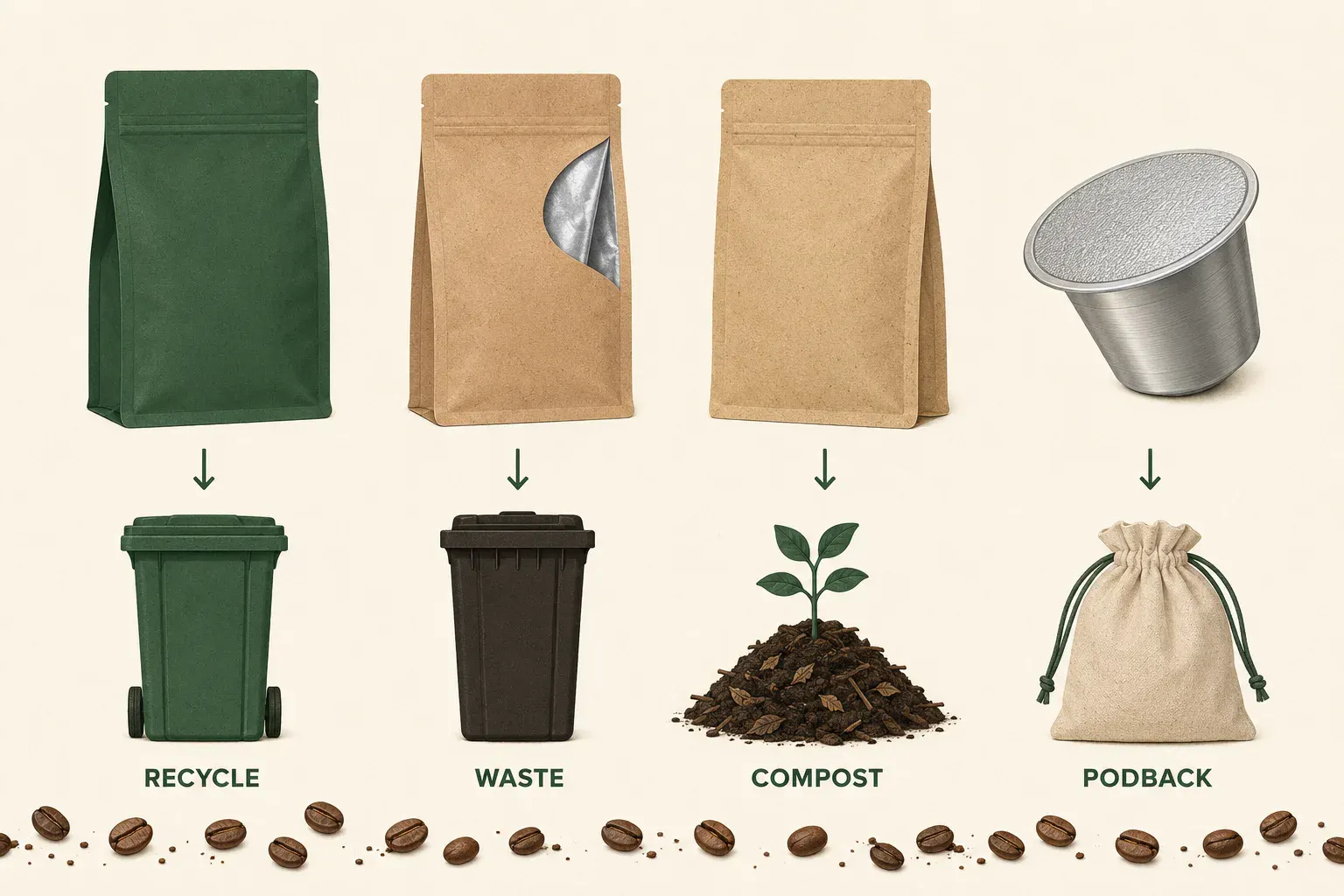
Some coffee bags belong in the recycling, some in the compost, and some — frustratingly — in the general waste. Putting the wrong one in the wrong bin doesn’t just waste the bag: it can contaminate a whole load of otherwise good recycling. The key is knowing what your coffee packaging is made of before you decide where it goes.
This guide covers every common type — recyclable mono-material bags, compostable bags, kraft and foil laminates, coffee pods and even the grounds themselves — plus the UK kerbside changes arriving by 2027.
// The Problem
Why coffee bags are harder to recycle than they look
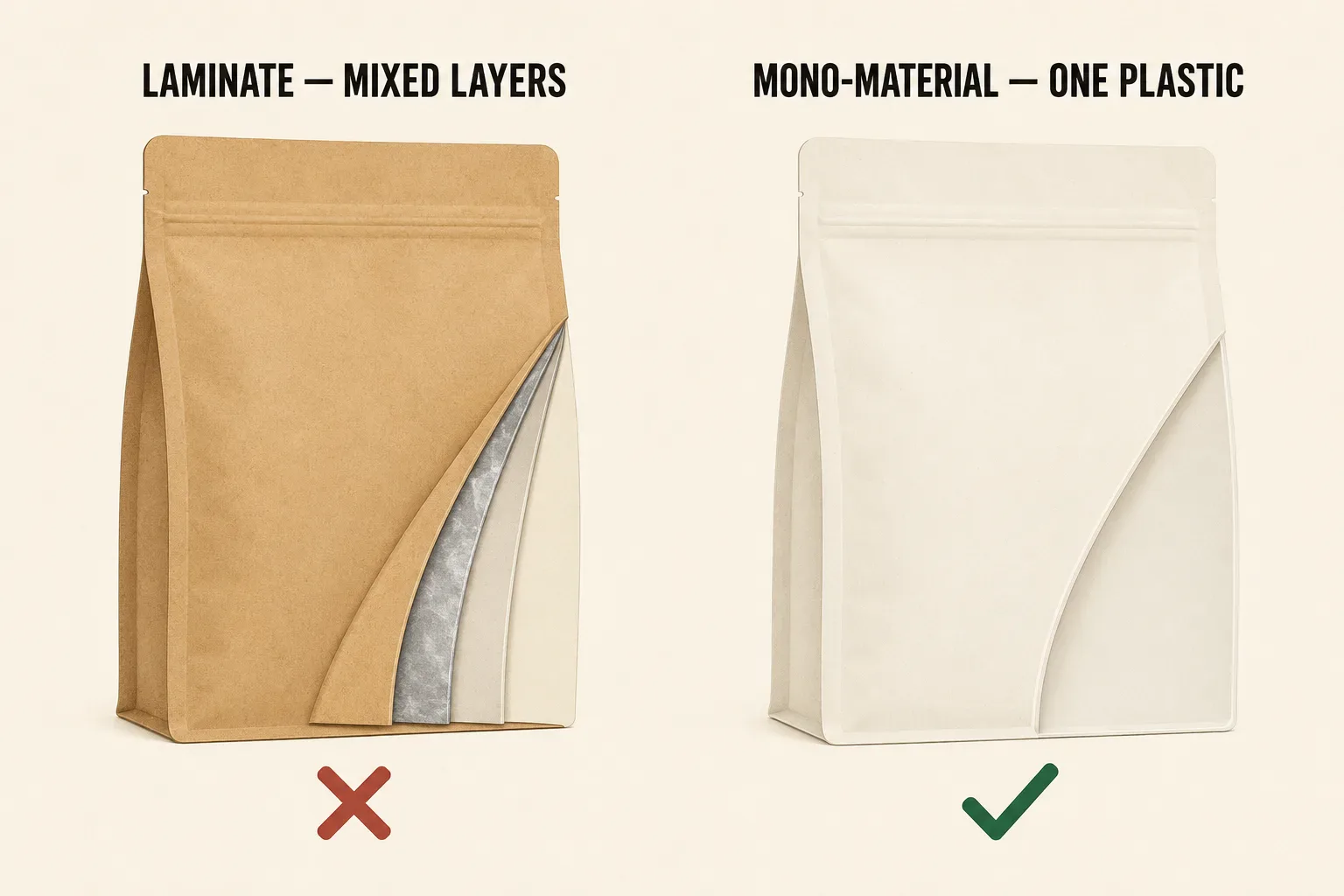
Coffee is a demanding product to package. Oxygen, light and moisture all stale roasted beans, so most traditional coffee bags are laminates — several thin layers of different materials (paper, plastic, aluminium) bonded together for barrier strength. That’s brilliant for freshness and useless for recycling, because the layers can’t be separated at a recycling facility.
- Looks can deceive. A bag that looks like kraft paper usually has a plastic or foil layer inside. If it’s a laminate, it can’t go in the paper bin — or any recycling bin.
- One material, one rule. Mono-material bags (a single plastic such as polyethylene) are the ones that recycle cleanly, because there’s nothing to separate.
- Compostable is not recyclable. Compostable bags go to compost, never in the recycling bin, where they’re treated as a contaminant.
So the process is always the same three steps: identify the material → empty the bag properly → use the right stream. Here’s the quick reference.
// Quick Reference
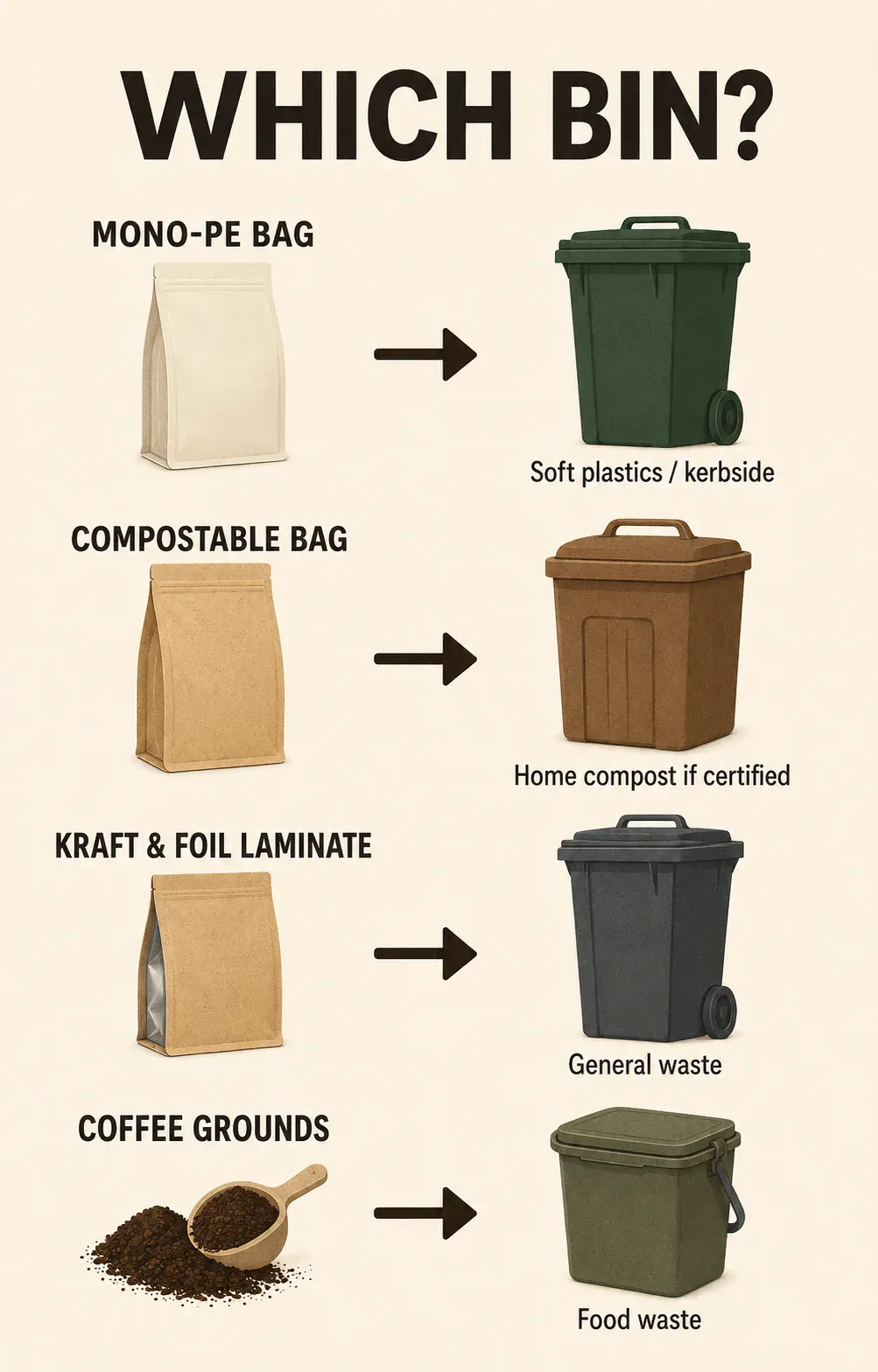
Which bin does your coffee packaging go in?
| Packaging type | How to spot it | Where it goes |
|---|---|---|
| Recyclable mono-PE bag | Single soft plastic; often labelled “recyclable” / PE 4 | Supermarket soft-plastics point; kerbside where your council collects film |
| Paper-stream recyclable bag | Certified paper-based structure, labelled for paper recycling | Kerbside paper recycling |
| Compostable bag (NKME/PLA) | Certification logo, e.g. OK compost HOME / EN 13432 | Home compost if home-certified; never the recycling bin |
| Kraft-look laminate | Paper outside, plastic or foil shine inside | General waste (or a specialist scheme like TerraCycle) |
| High-barrier foil laminate | Metallic inside, crinkles and holds its shape | General waste (or a specialist scheme) |
| Coffee pods | Aluminium or plastic capsules | Podback drop-off or Podback kerbside where offered |
| Used coffee grounds | — | Food waste caddy or home compost |
Whatever the material, empty the bag first — tip out every last ground and give it a shake. Leftover coffee is the most common reason packaging gets rejected as contaminated.
// Recyclable Bags
Recyclable mono-PE coffee bags: how and where
Mono-material polyethylene (PE) bags are the recycling success story of coffee packaging. Because the whole bag — body, zip and valve area — is one plastic, it can be reprocessed in the soft-plastics (polyethylene film) stream. We launched a mono-material recyclable coffee bag globally back in 2019, and it’s now one of the most popular choices among UK roasters.
To recycle one today:
- Empty it completely and shake out residual grounds. It doesn’t need washing, but it does need to be clean and dry.
- Check your kerbside first. A growing number of UK councils already collect plastic film and flexibles at kerbside — check your council’s list.
- Otherwise use a supermarket soft-plastics point. Thousands of larger Tesco, Sainsbury’s, Co-op, Morrisons, M&S, Aldi and Waitrose stores have front-of-store collection bins — coffee bags go in with bread bags and crisp packets.
And it’s getting easier: under the government’s Simpler Recycling rules, every local authority in England must collect plastic film at kerbside by 31 March 2027 — more on that below.
// Compostable Bags
Compostable coffee bags: getting disposal right
Compostable films such as PLA (made from plant starches) and kraft-paper-based compostable structures are a genuinely low-impact choice — we introduced compostable coffee bags in 2014. But “compostable” only delivers if the bag ends up in the right place, and this is where most people go wrong.
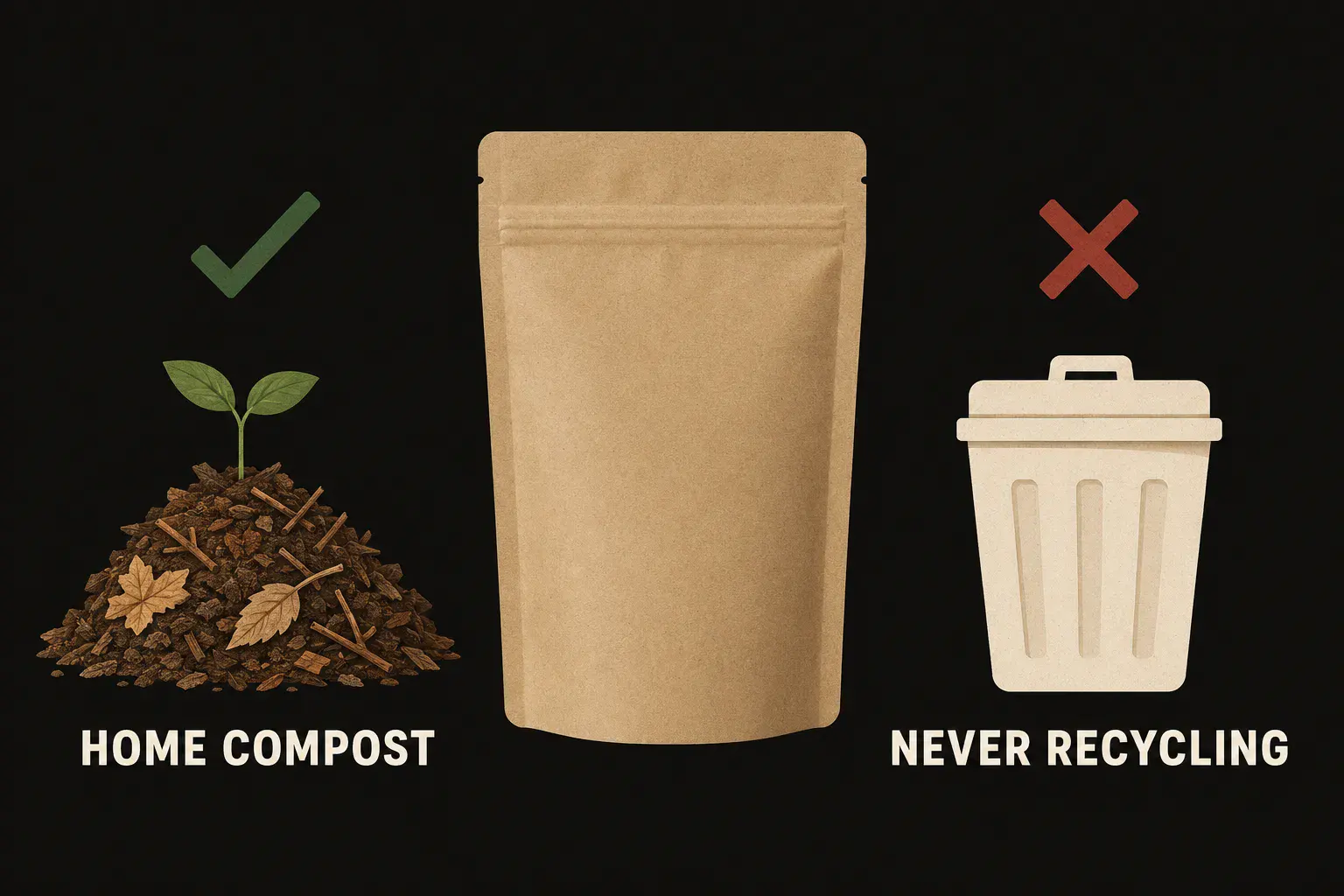
- Never put compostable bags in the recycling bin. Compostable plastics are a contaminant in plastic recycling — they can spoil an entire batch.
- Check the certification, not the word. A bag certified home compostable (e.g. TÜV Austria’s OK compost HOME) can go straight in your garden compost. “Industrially compostable” (EN 13432 only) needs the sustained 55–60°C of a commercial facility and will break down very slowly, if at all, in a cold home heap.
- Don’t assume the food waste caddy takes it. Most UK councils ask you to keep compostable packaging out of food and garden waste collections unless they say otherwise — check locally before you caddy it.
Look for the logo. OK compost HOME = your compost bin at home. EN 13432 / seedling only = industrial composting. No certification logo at all? Treat the “compostable” claim with caution.
// Everything Else
Laminates, pods and the grounds themselves
Kraft and foil laminate bags
The classic high-barrier coffee bag — kraft paper or matte film outside, plastic and/or aluminium inside — is a multi-layer laminate. The layers can’t be separated, so these bags can’t go in any household recycling bin, even the paper-looking ones. They go in general waste, unless you use a specialist scheme: TerraCycle runs brand-funded flexible packaging programmes and paid Zero Waste Boxes that accept coffee packaging. They still earn their keep on freshness — laminates give the longest shelf life of any structure — but end of life is their weak spot.
Coffee pods
Aluminium and plastic pods have their own national scheme: Podback, run by the major pod brands. Drain used pods, bag them, and drop them at a participating supermarket or recycling centre — and a growing number of councils collect Podback bags at kerbside. The recovered coffee goes to anaerobic digestion; the metal and plastic are reprocessed.
Used coffee grounds
The easiest win of all. Grounds are nitrogen-rich and belong in your food waste caddy or home compost, not the general bin — and with weekly food waste collections now standard across England under Simpler Recycling, every household has a route for them.
// What’s Changing
UK recycling rules are changing in coffee’s favour
Two pieces of the government’s Simpler Recycling reforms matter for coffee packaging:
- Weekly food waste collections are now required for households across England — an easy home for your used grounds.
- Kerbside plastic film collections by 31 March 2027. Every English local authority must collect soft plastics — bags, wrappers and film — at kerbside. For mono-PE coffee bags, that means dropping them straight in the household recycling instead of carrying them to the supermarket.
The direction of travel is clear: packaging that’s designed for a single recycling stream is about to get dramatically easier to recycle, while unrecyclable laminates face growing pressure — including higher producer fees under Extended Producer Responsibility. Which brings us to the roasters.
// For Roasters
Roasters: choose packaging your customers can actually recycle
If customers are googling how to dispose of your bag, that’s a branding moment — good or bad. Three ways to make it a good one:
- Pick a single-stream material. Mono-PE recyclable, paper-stream recyclable or certified home-compostable bags each give your customer one clear instruction. PCR and recyclable options can also support your Plastic Packaging Tax planning.
- Print the disposal instruction on the bag. A one-line “recycle with soft plastics” or “home compostable — certified OK compost HOME” removes the guesswork that sends good packaging to landfill.
- Match barrier to your shelf-life needs. Recyclable and compostable films offer good barrier — enough for most specialty coffee sold fresh. If you genuinely need the highest barrier, that’s what foil laminates are for; just be honest on the label. Compare structures in our materials guide.
All our eco ranges are stocked in the UK for next-working-day dispatch, from a single carton — so you can test a recyclable or compostable bag on real customers before committing to custom print. New to bag specs? Start with our coffee packaging beginner’s guide.
// FAQ
Frequently asked questions
Can coffee bags go in my kerbside recycling bin?
Only if the bag is a recyclable mono-material (like PE) and your council collects plastic film — a growing number do, and all English councils must by 31 March 2027. Otherwise, take mono-material bags to a supermarket soft-plastics point. Laminated kraft or foil bags can’t go in any household recycling bin.
Are kraft paper coffee bags recyclable?
Usually not. Most kraft coffee bags have a plastic or foil barrier layer inside, making them a laminate that can’t be separated for recycling. The exceptions are certified paper-stream recyclable bags, and compostable kraft bags — which go to compost, not recycling.
How do I know if my coffee bag is recyclable?
Check the label first — look for a recycling instruction or a PE/4 mark. No label? Check inside: a metallic sheen means a foil laminate (not recyclable); a paper look with a plastic film inner is also a laminate. A uniform, single-plastic bag is most likely mono-material and recyclable with soft plastics.
Can compostable coffee bags go in the food waste or recycling bin?
Never in the recycling bin — compostable plastics contaminate plastic recycling. Home-certified bags (OK compost HOME) go in your garden compost. Most councils don’t accept compostable packaging in food or garden waste collections, so check locally before using the caddy.
How do I recycle coffee pods in the UK?
Through Podback, the scheme run by the major pod brands. Drain your used pods, bag them, and drop them at a participating supermarket or household recycling centre; some councils also collect Podback bags at kerbside.
What’s the most eco-friendly coffee packaging?
There’s no single answer — it depends on the disposal route your customers will actually use. Mono-PE recyclable bags suit areas with soft-plastic collection; certified home-compostable bags suit customers who compost; paper-stream recyclable bags use the most widely available bin of all. All beat an unrecyclable laminate.
Ready to switch to recyclable coffee packaging?
Mono-PE recyclable, home-compostable and paper-stream recyclable bags — in stock in the UK for next-working-day dispatch, from a single carton. Try before you commit with a free sample pack.
Shop recyclable bags Shop compostable bags Free samples