 UK
UK EU
EU AU
AU UAE
UAE



Blog
Why do coffee bags have valves?
// Guide · Coffee Valves
That little plastic button on a bag of specialty coffee isn’t there for you to sniff — though most of us do. It’s a one-way degassing valve, and it’s the single feature that lets a roaster bag coffee fresh off the roaster without the pack bloating, bursting or going stale.
This guide explains why freshly roasted coffee releases CO2, exactly how a one-way valve works, the difference between internal and external valves, when you actually need one (and when you can skip it), and how the valve affects shelf life across the different bag formats. Written by The Bag Broker UK — supplying flexible coffee packaging from our UK warehouse since 2004, BRCGS & FSC certified and CO2-neutral.
// The Short Answer
So, why the valve?
Freshly roasted coffee is not inert. For days after it leaves the roaster, it releases carbon dioxide — a natural process called degassing. Seal those beans in an airtight bag with nowhere for the gas to go and the pack inflates like a balloon, and eventually splits at the seams.
A one-way degassing valve solves the problem elegantly: it lets CO2 out while stopping oxygen from getting in. That single piece of engineering is what makes it possible to roast, bag and seal coffee the same day, keep it fresh for months, and ship it without a single burst pack.
The nose test we all do at the supermarket shelf is a happy side effect — but the valve earns its place for a far more practical reason.
// The Science
Why freshly roasted coffee degasses
When green beans hit the heat of the roaster, the sugars and amino acids inside them react and transform — the chemistry behind coffee’s colour, aroma and flavour. A by-product of that reaction is a large volume of carbon dioxide, most of which stays trapped inside the porous structure of the bean after roasting.
That trapped gas then works its way out over time. Degassing is at its most vigorous in the first hours and days after roasting and tapers off over the following couple of weeks. The fresher the roast, the more gas it gives off — which is why the problem is most acute for exactly the coffee people want most: coffee bagged soon after roasting.
There’s a second, opposite problem. Oxygen stales coffee. Oxidation strips out aromatics and dulls flavour, so the last thing you want is fresh air circulating inside the pack. The roaster is caught between two needs — let gas escape, but keep oxygen out. A plain sealed bag can’t do both. A valved bag can.
// How It Works
How a one-way degassing valve works
The mechanism is simple, and that’s the beauty of it. A one-way valve is a small self-regulating pressure-relief device fitted to the bag film.
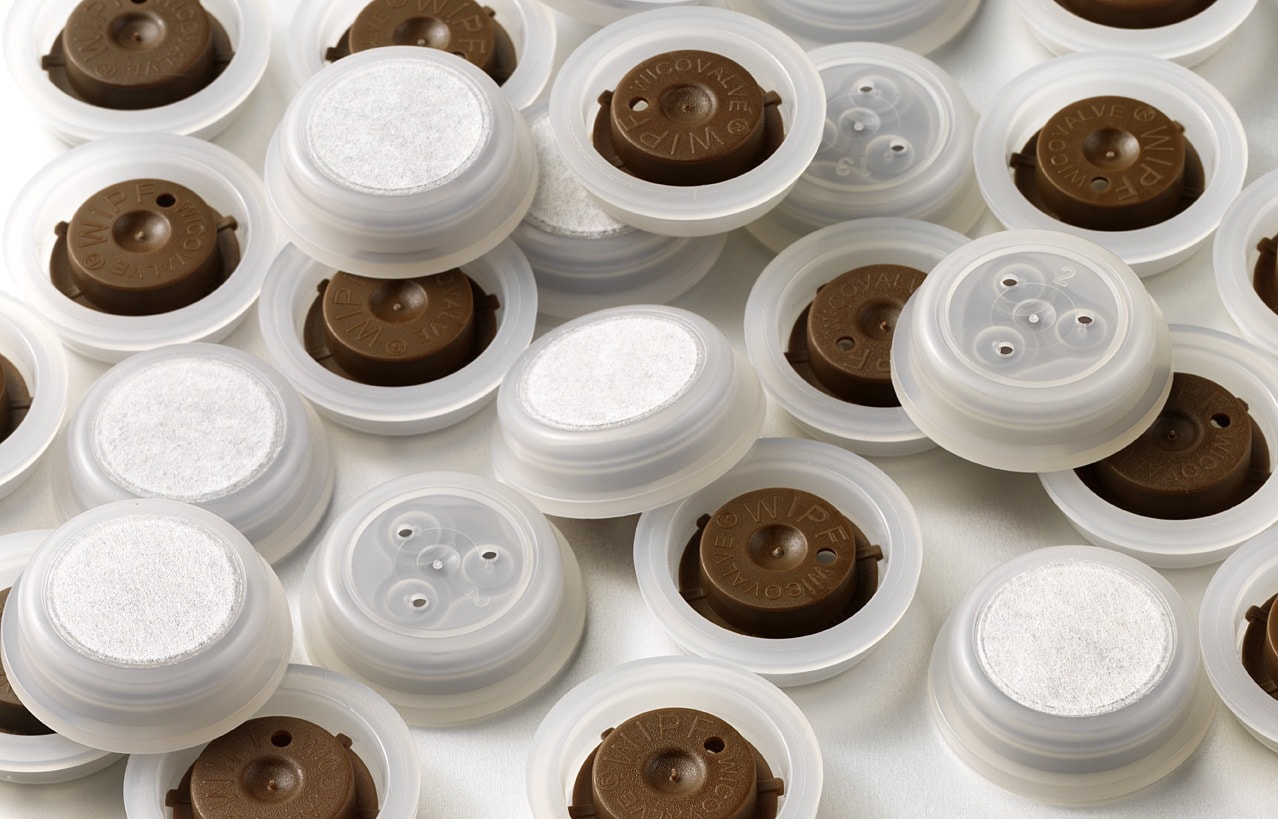
- Pressure builds inside. As the beans degas, CO2 collects in the headspace and pressure rises inside the sealed bag.
- The valve opens outward. Once internal pressure passes a set threshold, it pushes the valve’s seal open and vents the excess gas to the outside.
- It reseals — and stays shut to air. When pressure drops back, the seal closes again. Crucially, outside air can’t push its way in the other direction, so oxygen stays out.
The net effect: gas escapes, the bag holds its shape, and the coffee sits in a low-oxygen environment while it finishes degassing. Our coffee bags use a proven one-way Wicovalve degassing valve.
A valve isn’t about letting freshness out — it’s about letting gas out while keeping oxygen out. That one-way action is what protects flavour from roasting day to the moment your customer opens the bag.
// Types & Placement
Internal vs external valves
Degassing valves come in two mounting styles. Both do the same one-way job; the difference is where the valve body sits and how it looks on the finished bag.
| Valve type | Where it sits | Best for |
|---|---|---|
| Internal valve | Fixed to the inside of the film; only a small round vent shows on the outside | A clean, flush look on retail bags — the standard on most modern coffee packaging |
| External valve | Applied to the outside of the film, sitting slightly proud of the surface | Simpler application; often seen where the valve is added after the bag is made |
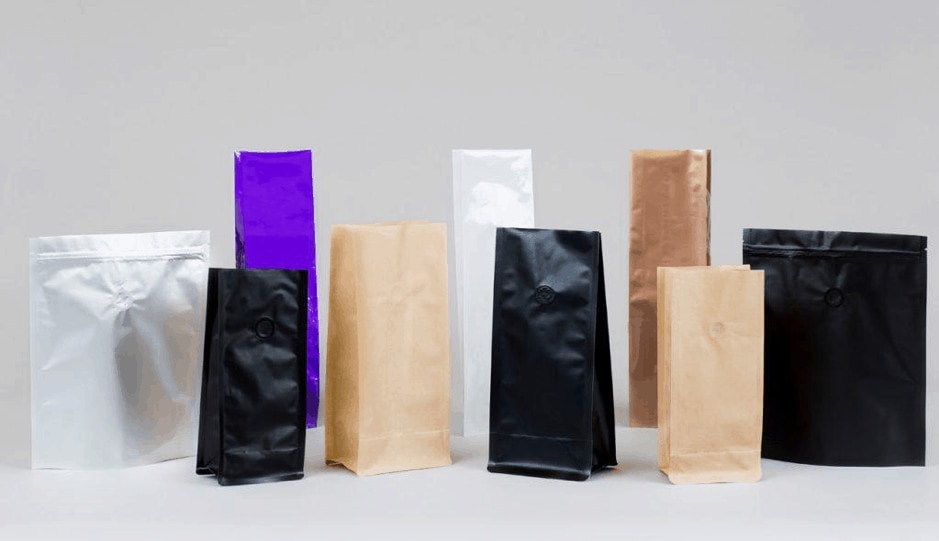
Placement matters too. The valve is normally positioned on the upper front or back panel of the bag, above the fill line, so it vents into headspace rather than being clogged by coffee. On a box bottom or side gusset bag it usually sits high on a front face; on a stand up pouch, near the top of a panel.
If you buy stock bags from us, the valve is already fitted and positioned correctly. We also sell degassing valves on their own for roasters who apply their own to plain film.
// When You Need One
When you need a valve — and when you don’t
A valve is essential whenever you’re packing coffee that is still actively giving off gas. It’s unnecessary — and an added cost — for products that aren’t.
Use a valve for:
- Whole bean or ground coffee bagged soon after roasting — the classic case.
- Any freshly roasted specialty coffee where you want to seal quickly and protect aroma.
You can usually skip it for:
- Coffee that has been rested and fully degassed before bagging.
- Instant coffee, which doesn’t degas.
- Single-serve drip coffee bags, and non-coffee products such as tea, granola or pet food.
This is why we stock coffee bags both with and without a valve — so you only pay for one when your product needs it.
If the coffee is going into the bag within a few days of roasting, fit a valve. If it’s fully rested, instant, single-serve, or not coffee at all, you can leave it out.
// Shelf Life
How the valve affects shelf life
A valve doesn’t work alone. Shelf life is the product of two things working together: the barrier of the film (how well it keeps oxygen, light and moisture out) and the valve (how it manages the gas the coffee itself produces).
Pair a high-barrier film with a one-way valve and you get the best of both: the coffee can be sealed fresh, the CO2 it releases vents safely, and very little oxygen ever reaches the beans. That combination is what keeps aroma intact for months rather than days. A high-barrier bag with no valve risks bloating; a valve on a low-barrier film still lets staling oxygen creep in over time.
Barrier and end-of-life are a trade-off worth understanding — kraft and foil laminates give the longest shelf life but aren’t recyclable, while mono-material recyclable and compostable films are kinder at end of life with a slightly shorter shelf life. We cover every film structure in our materials guide.
// Formats
Valves across the different bag formats
A degassing valve can be fitted to any of our coffee formats — the valve does the same job regardless of shape, and each format simply gives it a different home.
- Box bottom bags — the premium retail standard; the valve sits high on the large front panel.
- Side gusset bags — the traditional silhouette for bulk and wholesale, valve on a front face, often paired with a tin tie.
- Stand up pouches — versatile and resealable; valve near the top of a panel.
- Flat pouches and drip coffee bags — sample and single-serve formats that typically don’t need a valve, as the coffee is either a small taster or already portioned for immediate brewing.
New to choosing coffee packaging? Start with our coffee packaging beginner’s guide, which walks through formats, sizes, materials and the stock-vs-custom decision.
// FAQ
Frequently asked questions
Why do coffee bags have a valve?
Freshly roasted coffee releases carbon dioxide for days after roasting. A one-way degassing valve lets that CO2 escape so the sealed bag doesn’t inflate or burst, while stopping oxygen from getting in and staling the coffee.
How does a one-way coffee valve work?
As gas builds up inside the bag, internal pressure opens the valve and vents CO2 to the outside. When the pressure drops the valve reseals, and because it only opens outward, outside air can’t flow back in.
Does the valve let air into the coffee bag?
No. It’s a one-way valve, so it only allows gas out. Oxygen — which stales coffee — cannot pass back through it into the bag.
Do all coffee bags need a valve?
No. A valve is needed for coffee bagged soon after roasting while it’s still degassing. Fully rested coffee, instant coffee, single-serve drip bags and non-coffee products such as tea or granola generally don’t need one. We stock coffee bags both with and without a valve.
What’s the difference between an internal and external valve?
Both do the same one-way job. An internal valve is fixed inside the film for a clean, flush look with only a small vent showing outside; an external valve is applied to the outer surface and sits slightly proud. Internal valves are the standard on most modern retail coffee bags.
Can I buy just the valves?
Yes. Alongside coffee bags with valves already fitted, we sell one-way degassing valves separately for roasters who apply their own. Browse our valves.
Coffee bags with a valve, ready to ship
Browse valved coffee bags in stock for next-day UK delivery, order a free sample pack to feel the difference, or get a custom quote when you’re ready to brand your bags.
Shop coffee bags Free samples Get a quote