// FAQ
Frequently asked questions
Which is better for the environment: recyclable or compostable coffee bags?
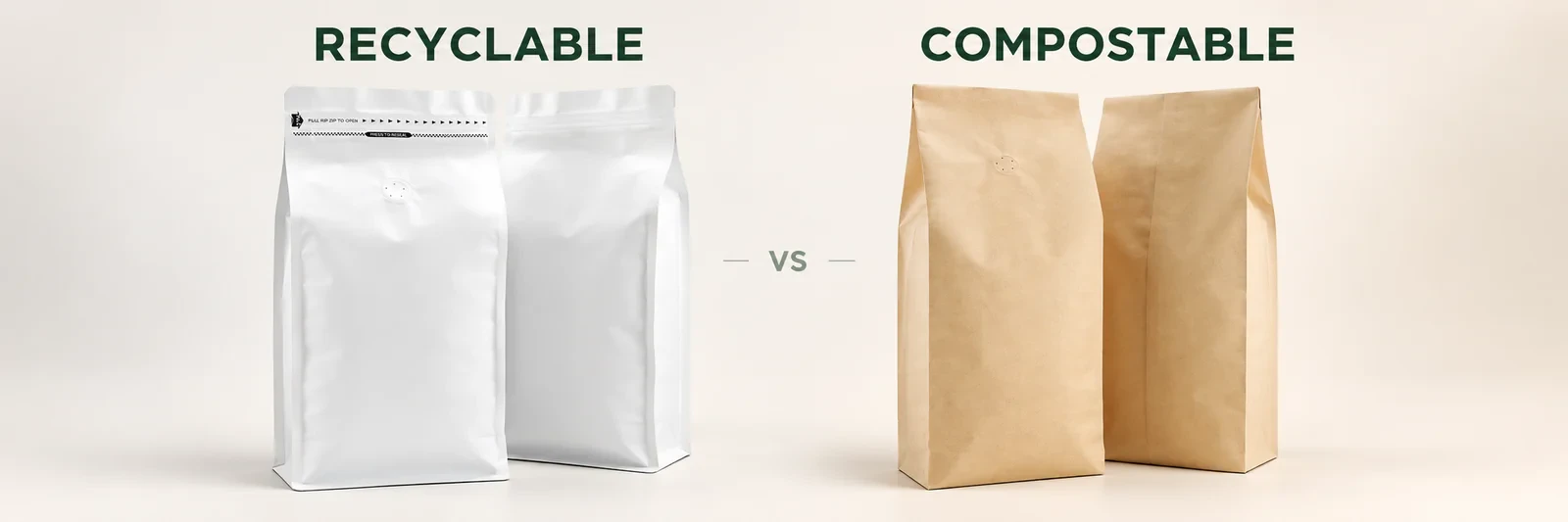
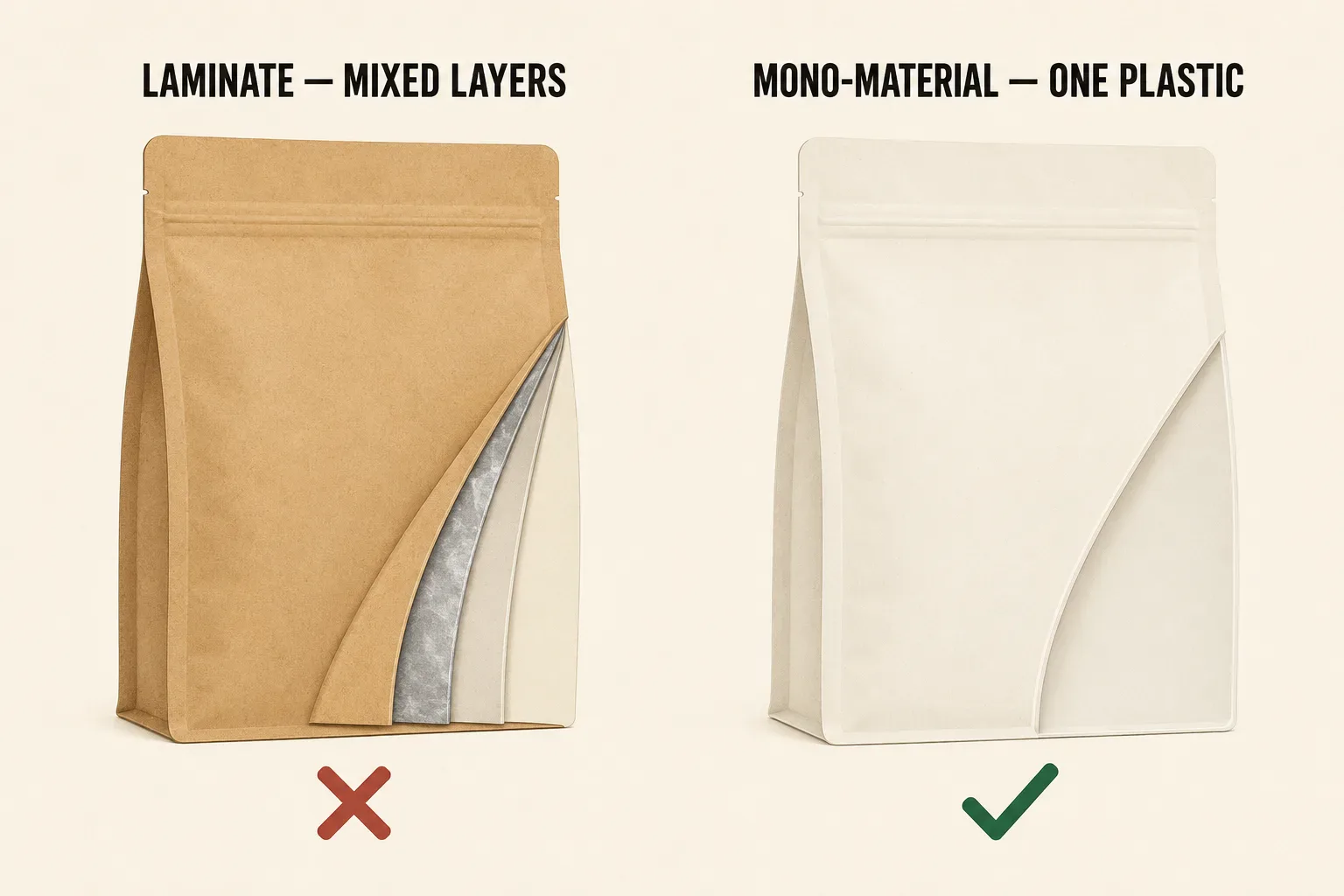
Neither wins outright. It depends on the disposal route your customers will actually use. Recyclable mono-PE works via soft-plastics collection (store drop-off points now, council kerbside collection across England by April 2030); certified home-compostable bags work for customers who compost. Both comfortably beat an unrecyclable laminate, which is the real comparison that matters.
Can a coffee bag be both recyclable and compostable?
No. The two routes are chemically incompatible: compostable films contaminate plastic recycling, and PE doesn’t compost. A bag is designed for one end-of-life stream, which is why the disposal instruction printed on the bag matters so much.
Do recyclable and compostable bags keep coffee as fresh as foil laminates?
Not quite, but enough for most specialty coffee sold and drunk fresh. Recyclable PE typically keeps roasted coffee around 6–9 months and compostable films around 3–6 months, against 12–18 months for high-barrier foil laminates (unopened, with a valve, stored cool and dry). If you genuinely need the longest possible shelf life, that’s the trade-off to weigh in our materials guide.
Can I get compostable coffee bags with a valve?
Yes. Our compostable range includes bags with a compostable one-way degassing valve and compostable zip, in box bottom, side gusset and stand up formats from 250g to 1kg. The valve lets freshly roasted coffee release CO2 without letting oxygen in; our guide to why coffee bags have valves explains how it works.
Are compostable coffee bags home compostable?
Only if certified for it. OK compost HOME (TÜV Austria) means the bag breaks down in a garden compost heap. EN 13432 alone means industrially compostable: it needs a commercial facility’s sustained heat and will struggle in a cold home heap. Check the logo, not the adjective.
What does the Plastic Packaging Tax mean for my coffee bags?
Plastic packaging with under 30% recycled content is taxed at £228.82 per tonne (from April 2026). The tax is paid by the UK manufacturer or importer of the packaging (once they handle 10 tonnes or more a year) and usually passed on in the price. Compostable plastic is taxed like any other plastic. PCR bags, recyclable PE with a post-consumer recycled core, are the direct answer, and from April 2027 post-consumer content is the only kind that counts.
Can I try recyclable or compostable bags before committing to custom print?
Yes, and that’s how we’d suggest doing it. Both ranges are stocked in the UK for next-working-day dispatch from a single carton, so you can test the bag on real customers first. Request a free sample pack, then brand it: short-run digital print starts from 500 units on compostable kraft and Paper Stream recyclable paper, and full custom print runs from 2,000 units.
 UK
UK EU
EU AU
AU UAE
UAE